
Qwick for Professionals
Qwick GPBusiness
3.12.84K Reviews
- Version
- 4.9.1
- Installs
- 500.00K
- Age Rating
- Everyone
Screenshots

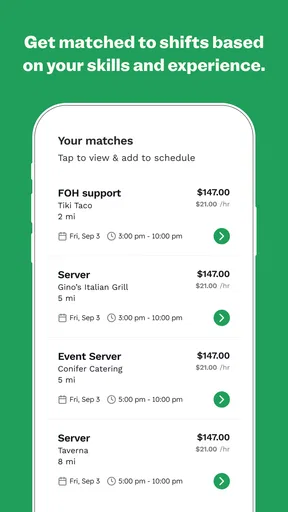
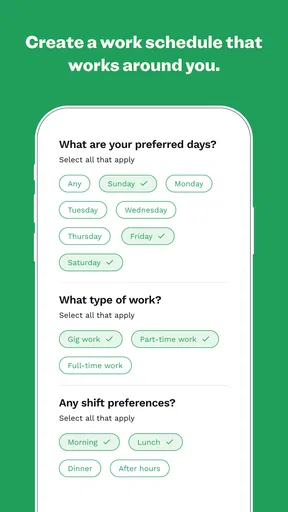
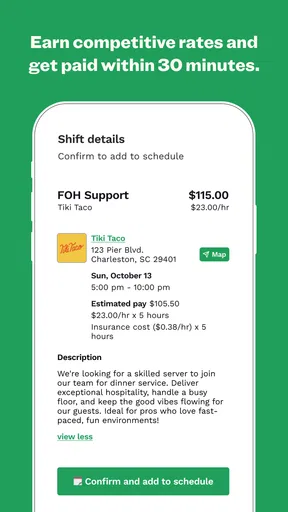
Our Review of Qwick for Professionals
 Analysis by Appyee
I tried Qwick for Professionals as a practical way to look for flexible food-and-beverage work rather than as a traditional job board. That distinction matters. The app is built around shifts, so the useful question is not simply whether it has many listings, but whether the available work fits your schedule, experience, travel limits, and need for dependable income. In my experience, Qwick makes the search feel more immediate than sending applications into a general hiring system, although that convenience comes with trade-offs that are easy to overlook.
Qwick is a free business app from Qwick GP, aimed at people seeking hospitality shifts. It is available to an Everyone audience, and its reach is already substantial, with more than half a million installs. The current version is 4.9.1, while the app itself dates back to April 2019, so this is not a new experiment trying to prove that shift work belongs on a phone. It has had time to establish a recognizable workflow, even though the average rating of 3.1 from roughly 5.8 thousand ratings suggests that the experience is not equally smooth for everyone.
How Qwick fits into real shift work
I look at Qwick through the small decisions that shape a shift worker’s day: whether an opportunity fits around existing commitments, whether the journey makes sense, and whether accepting it will create more certainty or more stress. Those practical checks matter as much as finding work quickly. They also point to the next question: how the app fits into real shift work.
A focused alternative to general job searching
The biggest strength is its narrow purpose. Instead of mixing permanent office roles, long application forms, and unrelated part-time vacancies, Qwick centers the experience on flexible food-and-beverage shifts. That makes it more useful for a bartender, server, cook, dishwasher, event worker, or hospitality professional who wants to find work around an existing routine.
I would not approach it as a replacement for a full employment search. A conventional job board is better when you want a permanent contract, a predictable weekly schedule, benefits, or a clearly defined career path. Qwick is more suitable when the immediate goal is to identify available work and decide shift by shift whether it fits.
The promise of daily pay is also important to the app’s appeal. For someone managing a short gap between paydays, waiting for a conventional payroll cycle can be the hardest part of accepting extra work. A shift marketplace that emphasizes quicker payment can therefore be more relevant than a platform offering a larger but slower hiring process. I still recommend treating those earnings as variable rather than assuming they will behave like a fixed salary.
What the first-time setup really requires
The app makes the most sense when your profile is treated as a working introduction, not a formality. Hospitality managers need to understand quickly what you can do, what type of shift you want, and whether you are likely to arrive prepared. A vague profile weakens the main advantage of a shift-based platform because speed only helps when the information behind the match is useful.
Before looking for work, I would prepare a short, accurate description of your experience and keep your availability realistic. Do not mark every possible time if you cannot reliably travel or work those hours. A shift app rewards responsiveness, but accepting something you cannot complete can create more trouble than declining it early.
One practical habit is to check the app at the beginning and end of your day rather than relying on a single weekly search. Flexible work changes quickly, and a shift that suits you may not remain useful after you have rearranged your schedule. This is one of the places where Qwick differs from a normal job board: the user experience is closer to monitoring opportunities than submitting a batch of applications.
A realistic day with the app
Imagine that you normally work several fixed days at a restaurant but have an open weekday because a colleague covers your usual hours. With Qwick, you could review available hospitality work, compare the timing with your commute, and decide whether a single shift is worth taking. The decision is not only about the listed work. You also need to consider preparation time, transport, clothing, food, and the possibility that the shift will leave you too tired for the next day.
That is why I find the app more useful for people who already understand their own working limits. It can help fill gaps, but it does not remove the need to judge whether a shift is genuinely profitable after travel and personal costs. A short shift across town may look attractive until the commute consumes a large part of the day.
For an event worker, the same workflow can be valuable in a different way. A person who prefers irregular work may use Qwick to keep an eye on opportunities without committing to a fixed employer. The benefit is control over individual decisions. The cost is that control can also mean uncertainty: you may have more choice about what to accept, but less confidence about what will be available later.
Small workflow choices that make a difference
One of the less obvious advantages of a dedicated shift app is that it encourages you to organize your availability around actual work blocks. I would keep a separate calendar for accepted shifts, travel time, and personal commitments. This prevents a common mistake: seeing two shifts as individually suitable while missing that their combined travel or recovery time makes the week impractical.
I would also review the details of a shift immediately before committing, rather than relying on the general type of work. Hospitality roles can differ greatly even when they use the same job label. The environment, pace, customer contact, and physical demands may not match what you expected from a short description. Qwick can make discovery faster, but it cannot make every workplace identical.
Another useful approach is to treat early shifts as an evaluation period for your own preferences. After each one, note whether the location, start time, role, and communication style worked for you. Over time, that personal record becomes more valuable than simply chasing the next available shift. It helps you recognize which opportunities are actually sustainable.
What has changed over the product’s life
Qwick’s current version, 4.9.1, shows that the product has continued to receive updates since its launch. That is relevant for existing users because a mature shift marketplace needs ongoing maintenance: account handling, shift discovery, communication, and payment-related workflows all have to remain usable as phones and operating systems change.
However, a version number alone should not be read as proof that every part of the experience has been transformed. I see it as evidence of continued product development, not a guarantee that the app will solve the deeper problems of flexible work. The central trade-off remains the same: convenience and speed on one side, availability and income uncertainty on the other.
The minimum operating system is Android 7.0, which keeps the app accessible to people using older Android devices. That can matter for workers who do not replace their phone frequently. At the same time, anyone using an older device should pay attention to general performance, notifications, and battery behavior, because a shift platform is much less useful if important updates are easy to miss.
What the current experience means for existing users
For someone already using Qwick, the continued evolution is most valuable when it reduces friction in the moments that matter: opening the app, checking a shift, confirming availability, and keeping track of accepted work. A smoother interface can save time, but the practical benefit depends on whether the app remains reliable during busy periods and whether the user keeps their profile current.
Existing users should resist the temptation to assume that an old profile remains effective forever. Skills change, availability changes, and a person’s preferred type of work can change after only a few shifts. Updating your information is not just cosmetic. It helps prevent mismatches between what you accept and what you are actually prepared to do.
I would also keep personal records outside the app. Save your own calendar entries, note the agreed shift information, and track earnings separately. This is not a criticism unique to Qwick; it is sensible whenever an app becomes part of your income routine. Your own records make it easier to spot scheduling conflicts and understand whether flexible work is helping your budget.
Where the app still falls short
The rating of 3.1, based on around 5.8 thousand ratings and about 2.8 thousand written reviews, tells me to keep expectations measured. It does not mean the app is unusable, but it does suggest that convenience may be offset by uneven experiences. A shift marketplace depends on more than the software itself. The quality of a match, the clarity of communication, and the reliability of the work arrangement all affect how users judge the app.
The biggest limitation is inherent to this kind of service: it cannot create steady work simply because you want it. If your rent depends on guaranteed weekly hours, Qwick should not be your only plan. It is better viewed as one channel for finding flexible work, alongside direct relationships with employers or a more traditional job search.
There is also a commitment risk. Flexible shifts can feel low-pressure when you are browsing, but accepting one turns it into a real obligation. I would skip Qwick if you are likely to accept shifts impulsively, have unpredictable transport, or cannot confidently meet the listed start time. The app may make opportunities easier to see, but it cannot compensate for unreliable availability.
People who dislike short-notice decisions may find the model stressful. A standard application process is slower, but it often gives you more time to compare employers, ask questions, and negotiate how a role fits into your life. Qwick favors users who are comfortable making quick, practical choices.
Who should use it and who should choose another route
I think Qwick is a good fit for hospitality workers who already have relevant experience, want flexible shifts, and can judge travel and timing accurately. It may also suit someone building a portfolio of workplace experience while keeping another job or managing studies. The free price removes a direct financial barrier to trying it, which makes experimentation easier.
I would be more cautious if you are new to food-and-beverage work and need extensive training before you feel comfortable. A direct employer may offer clearer onboarding and more consistent support. Likewise, if you want a long-term position with a stable team, a conventional application can be the better investment even if it takes longer.
Compared with asking friends for referrals, Qwick can expose you to opportunities beyond your immediate network. Compared with a general job board, it is more focused on individual shifts. Compared with contacting venues directly, it may be faster to browse, but direct contact can give you a clearer sense of the workplace and may lead to a more lasting relationship. None of these options completely replaces the others.
What I would watch before relying on it
I would pay attention to whether the app continues making the core workflow clearer for both new and returning users. The important signs are practical: can a worker understand a shift before accepting it, keep availability accurate, and manage commitments without confusion? Those improvements matter more than adding decorative features.
I would also watch how well the service serves workers outside the most convenient locations and schedules. Flexible work is only genuinely flexible when the available opportunities match real lives, including commute limits and irregular availability. A platform can be easy to use and still be a poor fit if the opportunities near you are too sparse or unsuitable.
Finally, I would judge Qwick over several weeks rather than after one promising search. Look at whether it produces work that fits your skills, whether the timing is repeatable, and whether the income justifies the effort around each shift. That longer view prevents the daily-pay idea from overshadowing the actual economics of your routine.
My recommendation after using the app
Qwick is most useful as a flexible-work tool, not as a promise of dependable employment. I like its focused approach to food-and-beverage shifts and the way it can reduce the distance between wanting extra work and finding a relevant opportunity. The free access and broad availability make it reasonable to test if hospitality work already matches your experience.
My recommendation comes with clear boundaries. Keep another income plan if your finances require certainty, track your commitments independently, and calculate the real value of each shift after travel and preparation. If you prefer stable employment, detailed onboarding, or a long-term workplace, another route will probably serve you better.
For the right person, though, Qwick can become a practical part of a weekly routine: check opportunities, accept only realistic shifts, record the commitment, and review whether the arrangement is paying off. That measured approach is more convincing to me than treating the app as a complete answer to work. It is a useful option for flexibility, provided you remain in control of the decisions it helps you make.
Verdict
Strengths of Qwick for Professionals
- Flexible shifts let professionals choose work that fits their schedule.
- Fast access to hospitality, event, and service-industry opportunities.
- In-app communication helps coordinate details with employers.
- Profile tools make it easier to showcase skills and experience.
- Useful for finding short-term work and building professional connections.
Limitations of Qwick for Professionals
- Availability of shifts can vary greatly by location and season.
- Some roles may require specific certifications or prior experience.
- Competition can be high for popular shifts and better-paying jobs.
- Income may be inconsistent for professionals relying on gig work.
- Last-minute schedule changes can make planning difficult.
Similar Picks in This Category
View All
LinkedIn: Community & Network
LinkedIn3.8

Zoom Workplace
zoom.com4.1

Microsoft Teams
Microsoft Corporation4.6

Meta Business Suite
Meta Platforms, Inc.4.6

Webex Meetings
Cisco Systems, Inc.4.5

TeamViewer Remote Control
TeamViewer4.4
Frequently Asked Questions
What is Qwick for Professionals, and who is it designed for?
Qwick for Professionals is a marketplace app for hospitality and event workers looking for flexible shifts. It is designed for professionals such as servers, bartenders, cooks, dishwashers, brand ambassadors, and other event staff. After creating a profile, eligible users can browse available gigs, review the requirements, apply for suitable opportunities, and manage their work through the app.
How do I create a professional profile and apply for shifts on Qwick?
To get started, you generally need to download the app, register an account, and complete a professional profile with your experience, skills, availability, and relevant personal details. Depending on the role and location, Qwick may require identity verification, an interview, background screening, or other approval steps. Once accepted, you can view matching shifts and submit applications directly.
How does payment work for professionals using Qwick?
Qwick is built around shift-based work, so payment is typically connected to the completion of an approved booking. The exact rate, payment timing, and available payout options can vary depending on the shift, market, client, and current platform policies. Before accepting an opportunity, carefully review the compensation, schedule, location, cancellation terms, and any requirements shown in the app.
Is Qwick available everywhere, and can I choose when I work?
Qwick availability depends heavily on your city and the local demand for hospitality and event professionals. The app is intended to provide flexibility, allowing approved users to select shifts that fit their schedules rather than committing to a traditional fixed timetable. However, the number of opportunities, job categories, and shift times may differ considerably between markets.
What should I know before accepting a Qwick shift?
Before accepting a shift, check the start and end time, exact venue address, dress code, required skills, responsibilities, pay details, and employer instructions. Arriving late, failing to attend, or leaving early may affect your reliability rating or future access to opportunities. It is also wise to confirm transportation, bring any required documents or equipment, and communicate promptly through the app if a problem occurs.
